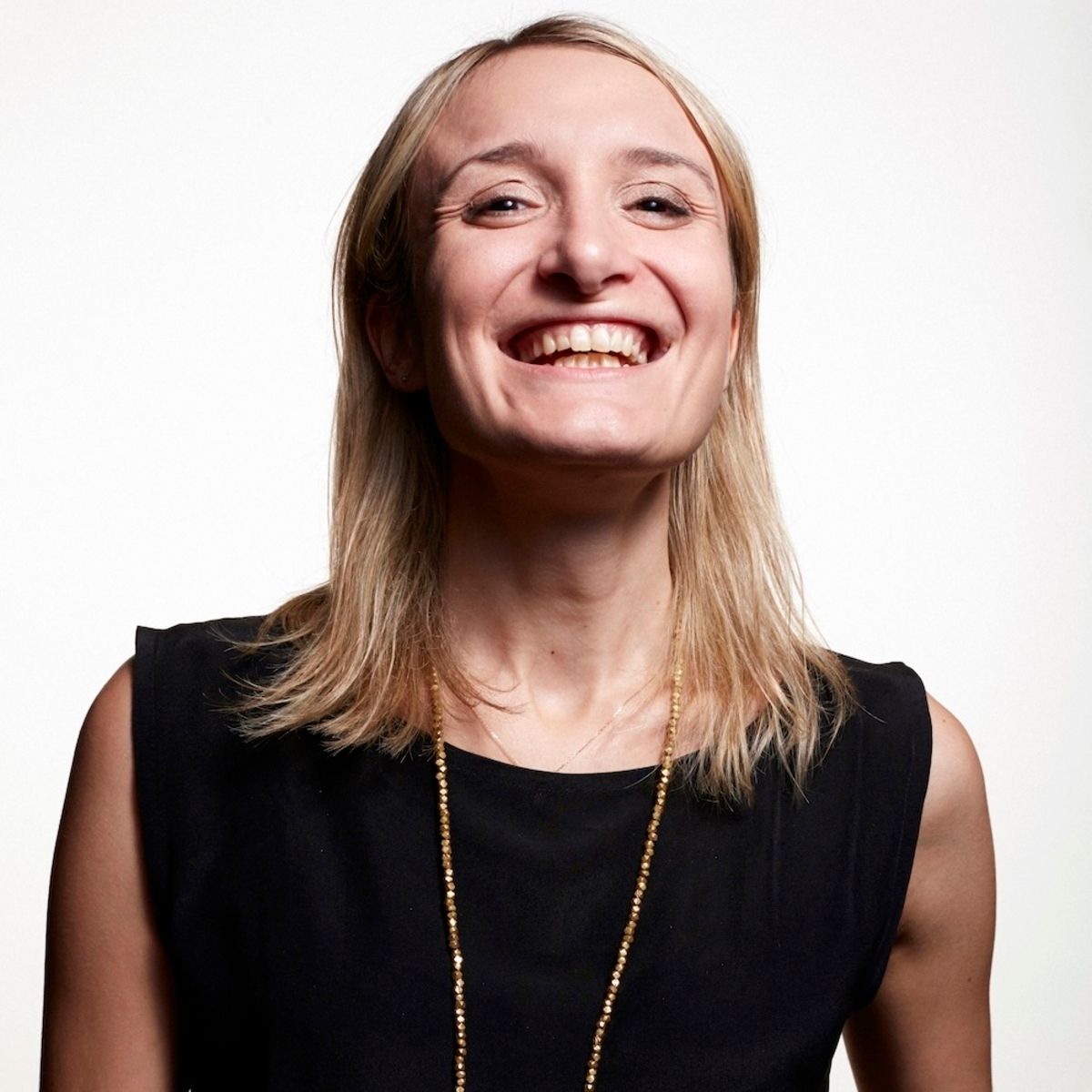
Happy week-after-Thanksgiving to all my readers. You might expect the news cycle to slow down during the holiday week, but federal agencies delivered several important updates on drug pricing and a new outcomes-based payment model for digital health providers. This is also the time of year when long-reported feature stories land. One standout holiday read came from The Wall Street Journal, which explored how people are using DNA tests to track down new relatives and even ask for part of an inheritance. The New York Times also published a must-read essay by my Scrub Capital co-GP, Dr. Jon Slotkin, on the safety of autonomous vehicles and their impact on public health.

Before diving into the healthcare news, I have a personal update. I am launching a new podcast, Lifers, featuring candid conversations with the builders, operators, clinicians, policymakers, authors, and lifelong healthcare obsessives in my orbit. 

Healthcare is not a “get rich quick” sector. Sales cycles are long, technology is outdated, regulatory hurdles abound, and companies often take decades to mature. Yet the payoff is enormous: the chance to improve human health and change lives at scale.

Click below to listen to our first Lifers episode, featuring Michelle Carnahan of Arbiter (formerly Thirty Madison): 

Other upcoming episodes include conversations with:

  • Ari Hoffman, MD – Collective Health

  • Dr. Graham Walker – ER physician, MDCalc & Offcall

  • Othman Laraki – CEO, Color Health

  • Sam Holliday – CEO, Oshi Health

  • V Bento – CEO, Sword Health

  • Warris Bokhari – CEO, Claimable

  • Mike Desjadon – CEO, Anomaly Health (guest co-host)

…and more leaders I admire deeply. We’ll cover: 

  • The future of CMS, drug pricing, and payment reform

  • Clinician burnout, care delivery challenges, and what innovation actually helps

  • AI integration, reimbursement friction, and the shift from volume to value

  • Category building across mental health, women’s health, primary care redesign, and more

There is so much noise in healthcare. My hope is that Lifers cuts through it and brings listeners closer to the people doing the real work.

Subscribe now to get the first episodes as they drop:

News Roundup: What you shouldn’t miss from the last week

With Annalisa Merelli

1. GLP-1 news: semaglutide fails to slow Alzheimer’s progression

The news: Novo Nordisk released results from its long-shot clinical trial evaluating whether semaglutide could slow the progression of Alzheimer’s disease. The drug showed no statistically significant benefit compared to placebo.

Market reaction: Novo shares initially fell 6%, though analysts widely expected the trial to miss. The stock later recovered.

Related development: Novo advanced its next-generation weight loss drug, amycretin, into late-stage diabetes trials.

Why it matters: The New York Times raised a fair question: Are clinicians, media outlets, and investors too quick to assume early hypotheses about GLP-1s apply broadly? This trial is an important reminder that enthusiasm can outpace evidence.

2. Medicare drug pricing: new discounts announced

The news: The Trump administration released a list of 15 drugs that will receive Medicare price reductions next year.

Key numbers:

  • Ozempic, Wegovy, and Rybelsus will see 71% price cuts.

  • The White House estimates $8.5 billion in total savings, a 36% reduction year-over-year.

Why it matters: Analysts in Washington are debating what this means for the Republican party’s position on drug pricing. Historically, the United States has allowed drug makers to charge whatever the market will bear. This shift toward direct price intervention could reshape long-standing assumptions.

3. Medicare advantage: insurers cut broker commissions

The news: To discourage costly, older patients from selecting their Medicare Advantage plans, major insurers are reducing or eliminating broker commissions and in some cases blocking brokers from enrollment portals, according to STAT’s Bob Herman.

Who is involved: Humana, UnitedHealthcare, Anthem, and Centene.

Why it matters:

“No one wants the new business,” explained Amanda Brewton of Medicare Answers Now. “It’s all bad risk.”

POV: Herman’s “hot potato” analogy is apt. As Medicare Advantage margins tighten, insurers are quietly looking for ways to shift the sickest patients elsewhere.

4. CMS unveils new putcomes-based payment model for original Medicare

The news: The Centers for Medicare and Medicaid Services announced a new 10-year payment model beginning in 2026. The model focuses on outcomes rather than volume, and opens reimbursement pathways for technologically advanced interventions that Original Medicare patients often cannot access today.

How it works:

  • Optional participation

  • Moves away from fee-for-service

  • Introduces outcome-aligned payments tied to successful condition management

Goal: Expand access to innovative tools such as telehealth, remote monitoring, and wearable devices for chronic disease management in Medicare populations.

Why it matters: Many details remain unknown, including reimbursement levels and outcome payment methodology. We’ve shared official coverage here and will continue tracking updates.

5. Sword Health: not going public anytime soon

The news: Sword Health, an AI-powered musculoskeletal therapy company valued at $4 billion, has no plans to IPO soon.

“Running a publicly listed company sounds terribly boring,” founder Virgílio Bento told Bloomberg.

Their goal: Build a trillion-dollar healthcare company.

Why it matters: Many founders feel this way, and venture investors increasingly support long private timelines. Secondary share sales offer liquidity, but most companies eventually go public when market conditions align.

In depth: when healthcare infrastructure fails

Advanced technology and AI cannot compensate for crumbling healthcare infrastructure. Fierce Healthcare reporter Ayla Ellison published a deeply reported piece on the closure of a rural hospital and the wide-reaching community fallout. It is an essential read for anyone thinking about the future of care access in the United States.

Deals and launches

Good to know

Michael Burry, of “The Big Short” fame, believes we are in the middle of an AI bubble. He now writes a Substack newsletter about it (yes, really). The cost to subscribe is $400. Worth it? Hard to say, but the internet cannot stop talking about it.

A reminder on upcoming webinars:

Webinar Topic

Timing

Registration

Storytelling Strategies that Work: Lessons from the field

Dec 4
2pm ET

Anyone can sign up here

Healthtech Marketing Strategies From the Frontlines: Three veteran health-tech marketers share their strategies in an era of AI

Dec 17th

This event is for premium subscribers only. Premium subscribers can sign up here.

Breaking Point: How Soaring Healthcare Costs are Reshaping Employer Strategies

Feb 9, 2026

11AM ET

Subscribers can sign up here

Live Second Opinion Media & TytoCare Webinar: Unpacking CMS' $50 Billion Investment into Rural Healthcare

Feb 5, 2026

Anyone can sign up here

Four questions with Bryon Crowe, Chief Medical Officer at Doctronic

Formerly the Chief Medical Officer of Solera Health

1) You've been very early to the scene when it comes to using AI in clinical practice, commenting a few years ago to the New York Times that you believe chatbots can be useful BUT only if used in the right ways. AI has come a long way since then. Do you still have that same hesitation? 

I’m more optimistic than ever that we are using AI in the right ways in clinical practice, and that it will improve care across the board. 

When I spoke with the Times for that piece in 2023, we were less than a year into having really high-performing AI at our fingertips (in the form of GPT-4). A lot was unknown - including major questions about how well AI would perform compared to expert clinicians across a variety of diagnostic and treatment scenarios.

Since then, numerous studies - including randomized controlled trials - have answered many of those questions. And the results are clear - the current crop of AI actually does better than doctors across diverse types of cognitive tasks, including very challenging clinical scenarios. Some have described these results as “superhuman,” and I don’t think that’s an exaggeration. We have now shown very clearly - including in several studies I was fortunate enough to co-author - that AI tools can perform at extraordinarily high levels in medicine.

These results are not only theoretical, but are reflected in the widespread adoption of AI tools by both patients and clinicians who find them helpful in the real world for improving care. I hear every day from patients who use AI to feel more prepared for a doctor’s visit, explore a complex issue or just get general information about their health.

Importantly, there is also a renewed energy among many of my physician colleagues now that they are using AI to improve their daily practice, whether through tools like ambient scribes that write their notes, or AI clinical decision support that helps them deliver better and safer care. I don’t know if anyone has quantified the increase in morale and excitement that many physicians are experiencing now that AI is in the mix, but I absolutely see and hear it in my daily conversations.

Even with this optimistic view, it goes without saying that we need responsible and ethical use, robust monitoring, and meaningful governance. These are requirements of any new technology, and AI is no different. But there’s an old saying that I think applies here:

“When culture is strong, you don’t need rules. When culture is weak, the rules don’t matter.”

In healthcare AI today, the culture is strong. The clinicians, technologists and healthcare organizations building and adopting AI tools are doing so with a sense of deep responsibility for getting things right and performing with excellence. We have a lot of really great people in the industry who don’t need anyone to tell them to do the right thing - they’re just going to do it because it’s right. I think that’s less spoken about, but really important framing. From both a technology and a responsibility lens, I think we are pointed in a very positive direction.

2) AI is exposing something about medicine that's true but hard to discuss in many circles. Not all physicians graduate number 1 in their class, and mistakes are made on the job. How do you see the evolution of that as AI keeps making strides in accuracy?

We’ve all heard the joke - what do you call someone who graduates last in their medical school class? 

“Doctor”

It speaks to a pervasive fear of getting a “bad” physician. But the reality is that most errors are the result of faulty systems, not bad clinicians. I’ve seen exceptional doctors make amateur mistakes, and amateur doctors have strokes of brilliance. Cognition is complicated! 

The good news is that AI will elevate performance of both individuals and the overall system. 

Even the clinician who graduated last in their class will have access to technology that performs as well as the clinician who graduates first in their class - and this will manifest as fewer diagnostic errors and more accurate treatment decisions across physicians of all skill levels. The difference between the ‘best’ and ‘worst’ practitioners - at least in terms of clinical skills - will become less and less important as AI becomes commonplace in care delivery. This narrowing of the skills gap has already been demonstrated in other domains. In one widely cited study, researchers at Harvard Business School showed that when management consultants used AI, overall quality went up. 

I also see AI being transformational for the quality and safety of care delivery in the United States because it is an improvement in the system itself. Imagine a world where there is an “AI Consult” before every clinical encounter - surfacing diagnostic considerations and recommending treatments that align with the most up to date guidelines and care pathways. Then, an AI monitors progression of the care journey - by reviewing notes, labs, and patient-reported data - and detects and mitigates errors before they occur. These are major systems-level enhancements that were simply not possible in a world before AI.

Finally, I see us redefining what the ‘best’ doctor looks like. It will no longer be the person who is the most knowledgeable - because knowledge will be easy to acquire - and instead shift to the doctor with the best judgement and communication skills. To be clear, physicians will always need to remain knowledgeable - it will just become lower weighted. Of course it would be great to have all three, but in a world of AI, the doctor who graduates first in their class will be the one who can best help patients navigate complexity and who builds the strongest relationships, not just the one who gets all the answers right.

3) What tech tools do you use on the job when you practice and why & conversely, what do you not use and why not?

My favorite way to use AI is as a thought partner - something to bounce ideas off of and get perspective - and that’s exactly how I use it in my practice as a hospitalist. I find that it’s a great way to test my own reasoning and perspective and strengthen my thinking around any particular case. An easy example: I might ask something like “Help me think through a differential for worsening leukocytosis in a patient on broad spectrum antibiotics” and then sort through what seems unlikely and what I should consider in my next steps. 

In the hospital especially, cases are complex and don’t neatly fit into a guideline - there often isn’t a clearly “right” answer, just several potential options, each with tradeoffs. Navigating those situations with AI often feels like having unlimited time and perspective from a highly skilled colleague at my side.

Ironically, I don’t use a lot of AI in note writing - especially for patient-facing communication. It’s important to me when I’m writing directly to patients that it reads in my own voice. I’m not opposed to others using AI for this purpose, but this is my stylistic preference.

4) You're a chief medical officer now for a venture backed startup - Doctronic. You still practice part-time as a hospitalist. How do you advise physicians in your network considering CMO roles who don't want to give up practicing? What's the right division of time? 

I think it is really helpful to maintain a clinical footprint, and I almost always recommend this path when people are considering whether to maintain a practice while in a startup role. I think there is a misconception that organizations will view senior leaders who still practice as “less committed” compared to their peers, but I actually think it’s the opposite. Practicing builds tremendous credibility, both internally and externally, and keeps you connected to the real-world frictions of patient care we’re trying to solve for. It makes you a sharper operator and a more grounded decision-maker.

I also think it’s a misconception to view CMOs who still practice as having divided attention. I think the right view is that practicing is just part of the job responsibility - wherever that practice setting might be. Blocking off time for ongoing clinical practice becomes a normal expectation and the organization supports it without blinking an eye. 

That said, the CMO role obviously requires a lot of energy and attention. I think 20% FTE is the right number for most people. It’s enough clinical footprint to be meaningful, it is an established model for clinical FTE alongside another role, and is manageable alongside the other CMO responsibilities.

logo

Become a paid supporter to see more

This newsletter is made possible by the paid contributions of users like yourself. Join hundreds of other healthcare professionals, investors, and entrepreneurs that have access to all of our analysis, reporting, opinions and interviews

Upgrade

A subscription gets you:

  • Subscriber-only posts and full archive
  • Post comments and join the community
  • Deep dive content and analysis
  • Access to remote and in-person events

Reply

Avatar

or to participate

Keep Reading