

If you want to know how AI will change medicine, just look at cardiology
AI is widely used in health systems as a tool for reducing clinicians' administrative burden. But that may only be the tip of the iceberg. What was primarily back office and front office is now moving into care delivery – we are now in the era of the AI doctor.
There’s a lot of talk about how radiology is a prime target for AI. But increasingly, industry experts view cardiology as the specialty most primed for disruption. Heart disease remains the leading cause of death globally.
“Cardiology is, in many ways, a flag-bearer for how the technologies could be used,” Dr. Joshua Lampert, an electrophysiologist and the medical director of Machine Learning for Mount Sinai Heart, tells Second Opinion, and adds that cardiology uniquely spans the “full spectrum of clinical care.”
The specialty is so well-positioned because it encompasses prevention and risk stratification for the development of heart disease, alongside inpatient management and follow-up care after a cardiac event. AI could be used across the full spectrum. Heart disease is also one of the longest-studied medical conditions in history, which means there’s plenty of data to feed AI algorithms.
There’s a reason that ARPA-H, the research and funding agency that supports biomedical breakthroughs, recently announced a program aimed at using AI to transform heart disease management. The agency is currently accepting applications for companies that can bring specialty care using agentic AI to millions of Americans who lack access to a cardiologist.
“Cardiology has more technology tools than virtually any other specialty,” Dr. David Albert, the founder and chief medical officer of AliveCor, a provider of AI-powered electrocardiogram (ECG) technology, tells Second Opinion. Dr. Albert notes that imaging has been digitized for over two decades, so there’s a strong precedent for the specialty to adopt new technologies.
Using existing diagnostic tools, clinicians and entrepreneurs are already experimenting with AI that can identify subtle signs of disease and patients at higher risk of disease progression — and provide analysis of wearable data. For its part, Alivecor already has on the market a personal electrocardiogram (ECG), as well as an alerts system called KardiaAlert that informs its 300,000 patient subscribers about potential changes to their ECG. Dr. Albert noted in the announcement that the system - dubbed KardiaMobile 6L Max - can identify up to 20 arrhythmias with a clinician review.
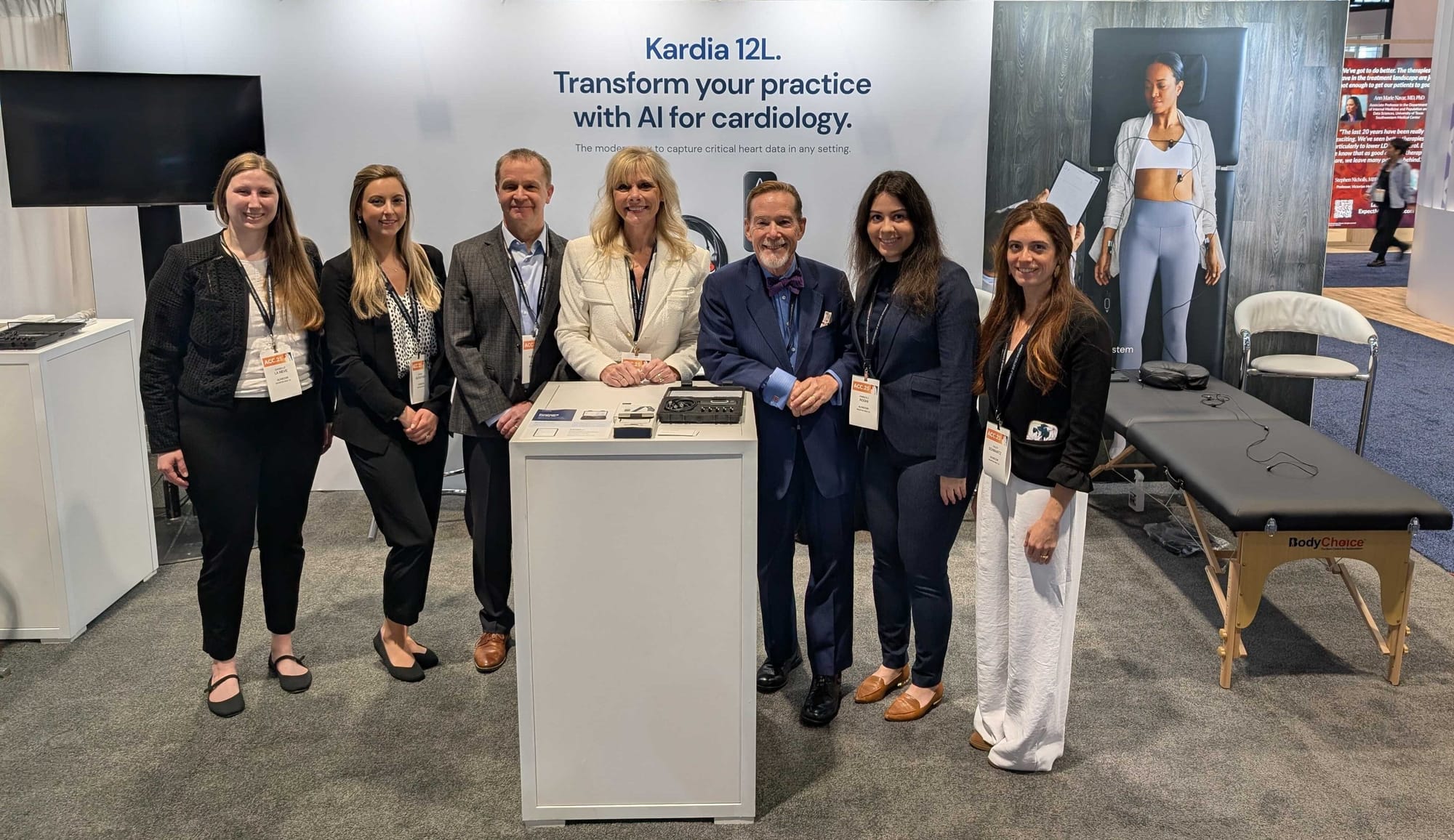
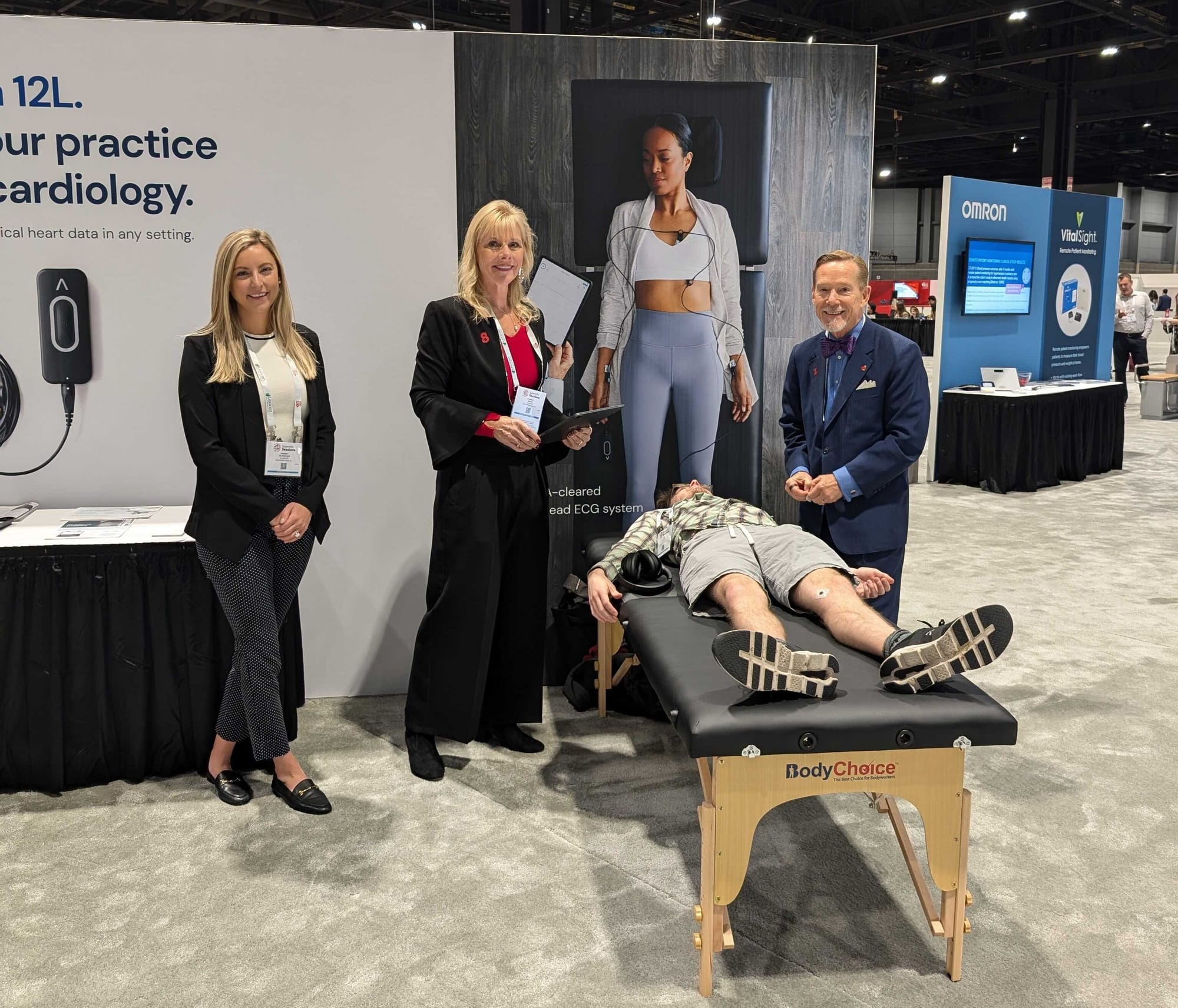
Editors’ Note: Alivecor.com is a sponsor of this analysis and overview of the AI and cardiology space.
“There are new mathematical approaches that are feasible now that weren't ten years ago for a variety of reasons,” Lampert adds, indicating that it's due to integrated electronic health records and improved machine learning capabilities. “What we can do now is actually make individual estimates of probabilities for a clinical outcome.”
Medicine’s Biggest Data Mine
Cardiology, one of medicine’s most technology-dense specialties, sits on a treasure trove of data.
“Cardiology is really a hotbed for where these deep learning tools are able to shine,” says Lampert. “Humans don't have the cognitive bandwidth in the modern era of medicine to assimilate all of this data and be able to quantify their uncertainty in any prediction.”
Dr. Jeffrey Wessler, a cardiologist at Northwell Health in New York, agrees and says the problem in cardiology isn’t a lack of data, but rather, too much of it. “These AI models require such a large amount of data across diverse populations to be effective, and cardiology was built for that,” he told us.
Wessler recalls that the space “was just beginning” when he founded Heartbeat Health in 2017. In building the company, Wessler had a strong conviction that cardiology was the right place to innovate, given the urgent need for solutions to a shortage of specialists in an aging population.
“We, as a field, have been very rigorous with building evidence and bringing data to the table to say we actually are really evidence-based in what we do with patients, how we diagnose, how we treat it, [and] how we care for them,” Wessler says, whose company offers same-week telehealth care and at-home diagnostics aimed at at-risk patients. “But we're struggling to get it to all the people who really need it.”
Within four years of founding the company, Wessler was pleased with how fast remote care was embraced in cardiology to improve delivery, and believes that, in time, “the technology would follow.”
It has.
Diagnostic Partner
The most standard tool in cardiology is the electrocardiogram (EKG or ECG), measuring heart rate and rhythm to detect abnormalities. Without replacing a test or clinical evaluation, AI can use EKG data to detect subtle patterns that could indicate a patient is at a higher risk for a future cardiac event.
“You can take an EKG, and the AI can tell you you might be at risk for heart failure. But, it's not actually saying you have heart failure,” Wessler says, adding that the AI isn’t replacing the clinician here. “Even though that is a really monumental technological accomplishment … We still have to confirm everything.”
AI used on top of a CT angiogram, for example, can help analyze the presence of fatty plaque buildup in the arteries in what were thought of as grayscale images, according to Albert. AI can also provide more information that may guide treatment plans. Lampert recently unveiled research on a first iteration of a tool to use electronic health record data to compute the net benefit of a given treatment option in cardiology. Take blood thinners, for example. Depending on the patient’s presentation, they can increase the risk of bleeding if taken, but the risk of stroke if not. Machine learning can “quantify the uncertainty,” Lampert says.
“That, in my opinion, is somewhat of the Holy Grail of what we want to be able to do when we make a clinical decision for a patient,” he says. “It rethinks the paradigm of how we make a decision.”
AI is also being integrated into preventive cardiac care, using real-time data from wearables like the Whoop, Apple Watch or the Oura Ring that are geared to patients. Physicians are also getting improved access to cardiac measurements and readings. Alivecor has its own medical grade ECG technology with FDA clearance to detect a variety of cardiac conditions, which is trained on 1 million recorded ECGs. That will speed up the time it takes to get an accurate reading.
Wearables and the Rise of At-Home Preventive Care
With the global wearable market now exceeding $90 billion, algorithms are increasingly trained on people’s everyday heart metrics to detect abnormalities and infer personalized prevention remedies, like lifestyle changes. Researchers at Mayo Clinic developed an algorithm that uses Apple Watch EKG data to detect patients with a weak heart pump.
Priya Abani, CEO of AliveCor, sees a world where the quality of cardiac care is independent of where someone lives. “It's about reducing the distance between a world-class diagnosis and a patient's living room,” she says. “This is going to shift the entire paradigm from reactive treatment to proactive prevention. We're building a world where heart disease, which is, unfortunately, the leading cause of death globally, should no longer have the element of surprise.”
Most recently, ŌURA offers a Cardiovascular Age (CVA) test that uses sleep-derived heart data that estimates markers associated with large-artery stiffness to see how fast your heart is aging compared to your biological age. Their cardio capacity measurement is the wearable’s age‑adjusted estimate of VO2 max, a measure of cardiovascular risk and cardiorespiratory fitness, explains Dr. Ricky Bloomfield, the chief medical officer at ŌURA.
“For clinicians, I see both as adjunctive trend tools, not diagnostic endpoints,” he says. As he explained, CVA (the test) and Cardio Capacity can help frame conversations about vascular aging and fitness, and show users whether lifestyle changes are moving in the right direction over months. From there, the technology could flag when someone looks meaningfully different from their own baseline, prompting more formal evaluation when appropriate.
While not a replacement for a clinician, AI tools can provide early awareness of heart disease and provide a sense of ‘normal’ for each individual. Tools like ŌURA Advisor give people personalized lifestyle recommendations based on patterns in collected data, like heart rate, heart rate variability, stress, and activity. Bloomfield says ŌURA is currently studying how wearable data alongside AI‑guided coaching can meaningfully improve heart health.
“Instead of making decisions from brief snapshots, cardiologists will increasingly have access to longitudinal physiologic data from validated wearables and home devices, summarized by AI into clear, individualized trends,” he said.
Cardiology is the specialty that has the second-highest number of FDA-cleared AI applications behind radiology. It’s well positioned in the eyes of regulators because of the massive shortages of specialists and the patient need.
As for the future of AI and cardiology, Albert thinks of something Yale cardiologist Harlan Krumholz said once.
“I expect in five years, no more than 10 years, that doctors won't read EKGs anymore, but the AI will read EKGs, and [we] will be completely confident that they're doing a great job,” he says. “When AI becomes invisible and yet prevalent, that's when we know it's reaching its full potential. There will be invisible AI.”
All of this is giving him a lot of reason for optimism about the specialty’s future.
“AI will be a phenomenal aid to the practice of medicine,” he said by phone. “And I can't tell you exactly when, I just know the trajectory is up and to the right.”
The medical community can and should take note from here.
The last word from our author:
As a data mine, it’s clear that cardiology will be the specialty to follow and learn from when it comes to integrating AI into the doctor’s office. I’m particularly curious what more knowledge on our “risk” will mean as a heart health vital sign. How can we quantify risk to determine which measures or treatments are actually helpful and will provide a net benefit? Will there ever be such a thing as having too much data on our health if minor alerts cause unnecessary intervention?
Want to support Second Opinion?
- 🌟 Leave a review for the Second Opinion Podcast
- 📧 Share this email with other friends in the healthcare space!
- 💵 Become a paid subscriber!
- 📢 Become a sponsor
Upcoming Sessions
Live conversations with the people shaping healthcare.

Is It Finally the Moment for Alternative Plan Design?
Employers are under growing pressure to control healthcare costs while improving access, outcomes, and the member experience. That has renewed interest in

Type 2 Diabetes & Cardiometabolic Care: Wearables, AI & GLP-1s
The rise of wearables, GLP-1s, and AI is reshaping treatment for Type 2 diabetes, weight loss, and metabolic disease. We have

Verifying AI in Medicine: Is Healthcare AI Actually Ready for Deployment?
Is AI ready for real-world clinical care? Dr. Zak Kohane and Protege’s Engy Ziedan debate what it takes to safely trust AI in diagnosis and treatment, from benchmark performance and clinical evidence to whether we’re holding AI to a higher standard than humans.

Why Are Hospitals Hiring Chief AI Officers?
As AI moves from pilots into day-to-day healthcare operations, health systems are having to decide who should actually own the


Where are AI Agents Actually Working in Healthcare, and Why?
While the healthcare industry remains locked in a high-level debate over the theoretical potential of artificial intelligence, a select group of

Top Employers Share What Healthcare Startups Need to Know in 2026
As enterprise health purchasers face volatile medical cost trends and tightening operational margins, the standard vendor pitch of "improved clinical efficiency&

Peptide Therapy: Where Do We Go From Here?
Watch the full webinar Peptide therapies have moved from niche biohacking circles into mainstream medicine, reshaping conversations around weight management, metabolic health,

Not everyone can access the top 1% of physicians. Will AI change that?
Historically, top-tier medical expertise was limited by wealth and geography. As AI reshapes healthcare delivery, a vital question emerges: can it democratize intelligence to give everyone access to the caliber of care typically reserved for the top 1%?

Privacy AI and the Future of HIPAA
Watch the Full Webinar As AI reshapes healthcare and more patient data flows beyond traditional clinical settings, the rules governing privacy, access,