

Updoc's FDA Win Raises the Stakes for Health AI Rivals

Ruth, here. Perhaps the most interesting news of the week is from Updoc, a clinical platform that combines traditional physician-led medicine with AI to deliver primary care. This week, the Food and Drug Administration authorized the company to use AI to tweak insulin doses for patients with Type 2 diabetes.
Cleveland Clinic will be running a pilot of the program in the fall, wherein Updoc’s bot does patient follow-up, reviews their glucose levels, and adjusts medication as needed. It’s not clear if the FDA is taking a different approach to post-market surveillance for this particular product. The Wall Street Journal’s report only says that the Cleveland Clinic and Updoc will evaluate the technology’s impact on patient outcomes.
Updoc’s move is interesting because so many companies in the same category are actively avoiding FDA regulation. Doctronic, a platform that uses both doctors and AI to treat patients, is testing AI prescription renewals. But rather than get authorization from the FDA, it’s testing its technology in Utah through a state-run program. The FDA has not signaled that it will interfere with the state’s program.
The FDA regulates software involved in the diagnosis, treatment, cure, or mitigation of a disease. As a result, many similar companies are pursuing AI products that are more supportive. For example, several different AI companies are using bots to take on administrative work, surface relevant medical literature, and scribe on behalf of doctors. Some doctors are also not happy with AI taking on aspects of their workload.
Certainly, people will be watching Updoc to see what this authorization does for the company and if it helps propel it to success. FDA authorization does not necessarily lead to big commercial wins (for some digital health companies, it’s done quite the opposite).
My sense is that many health tech companies and health systems will want to keep AI in a supportive role for the foreseeable future.
And now, the news of the week.
Episode 1 of Rounds is here!
Co-hosted by Christina Farr and Stephanie Davis, this episode dives into women’s health care. Megan Scheffel from Silicon Valley Bank joins to break down the latest SVB women’s health report, and Joanna Strober, Founder of Midi Health, sits down to talk about building a billion-dollar company out of a gap the healthcare system spent decades ignoring.



NEWS
Trump nominates Chris Klomp as Dep. Sec.
President Donald Trump has officially nominated Chris Klomp, a former health tech entrepreneur turned regulator, to be Deputy Secretary of the Department of Health and Human Services, replacing Jim O’Neill. Klomp joined HHS as Director of Medicare last year. After O’Neilldeparted in February, Klomp became a senior advisor to health Secretary Robert F. Kennedy Jr.
The med-tech industry approves of the nomination: “Mr. Klomp knows that our industry faces very real challenges that require real solutions,” said CEO of AdvaMed, a large lobbying group representing medical devices, Scott Whitaker.
Stripe, OpenAI, and Anthropic fight the common cold
Payment company Stripe is creating a non-profit to cure the common cold. The non-profit, which has $500 million in funding, will be called Intercept. Its researchers will look at large scale aircleaning systems and vaccines as potential ways to thwart common illness. OpenAI Foundation, Anthropic, FluLab, Bill Gates, and others will contribute funding.
FDA reforms cuts up to a year to safety studies
The Food and Drug Administration unveiled reforms that could reduce the duration of first-in-human safety studies by six months to a year. The changes add clarity on early-phase manufacturing and dosing, a rolling review, and a forthcoming pilot to speed early trials. The agency also reaffirmed a policy that one high-quality trial plus safety and confirmatory evidence can suffice for approval.
Everyone wants to message their doctor
Online portal messages to providers more than doubled between 2020 and 2025, going from from 2.2 to 5.4 per patient per year (that’s a 153% increase), according to an NYU study. In-person visits rose, too: from 2.37 to 2.77 per patient per year (a 17% increase).
Whoop MG can keep tracking blood pressure
The FDA dropped its complaint against Whoop over its blood-pressure tracking tool, reversing an earlier request that the company disable the feature. The dispute, started in July 2025, was based on the FDA’s concern that tracking blood pressure made Whoop MG a medical device, therefore needing the agency’s clearance. However, in January, the FDA published updated guidance saying that it would not regulate “low risk general wellness products,” which is how Whoop classifies itself. Experts aren’t sure this is the best outcome.
GUESS WHO
Eli Lilly has a new drug, retatrutide, which achieves levels of weight loss comparable to bariatric surgery. The drug is yet to receive FDA approval though the agency and the company allowed one 79-year-old patient to take it for “compassionate use,” STAT’s Lizzy Lawrence found out.
Her sources, “who requested anonymity due to fear of reprisals, said it drew the interest of top health officials, suggesting the person receiving this drug was well connected.” Is this patient who you think it is? STAT tried to find out.
DEALS & LAUNCHES
OpenEvidence, an AI platform used by 40% of doctors, raised $250M at a $12 billion valuation. The series D was led by Thrive Capital and DST Global.
Ensemble, a revenue cycle management company serving more than 200 hospitals and over $55 billion in net patient revenue, secured a strategic growth investment from Thoreau. The amount of the investment was not disclosed.
Cadence, a clinical AI company managing chronic care for older adults, closed a $100 million Series C round led by Spark Capital.
Telepatia, an AI clinical platform for Latin American hospitals, raised $33 million in a Series A round led by Andreessen Horowitz.
Prosper AI, a healthcare administration agent company, closed a $30 million Series A led by Andreessen Horowitz.
xCures, a startup that uses AI to streamline patient data and medical records, has closed a $46 million Series B financing round led by Innovius Capital.
Epic announced EpicOps, a natively integrated enterprise resource planning suite built for healthcare that will unify financial, operational, and clinical data. The rollout will come in three phases, starting with Teamwork, a clinician and staff scheduling and resource planning module.
Xella Health, which bills itself as “the first AI-powered precision health platform built explicitly for the XX chromosome,” promising to detect and treat over 130 exclusively female conditions. The company, which has a 15,000 women waitlist, launched with the offering of a $499 annual membership, available in 48 states (New Jersey and New York will be coming in early 2027). The company is backed by $4.7 million angel and pre-seed funding.
Fearless Fractionals Update
Last week, we brought together 30 fractional healthcare leaders across marketing, communications, strategy, finance, clinical, and product for our second Fearless Fractionals Offsite -- an afternoon of sharing insights, building community, referring business, and getting hands-on with how to implement AI workflows into independent practices.
Fractional work continues to appeal to healthcare organizations for the ability to access senior talent without the full-time commitment or agency overhead. Attendees joined from across the country, sharing impressive work spanning product development, commercial strategy, go-to-market optimization, and brand awareness.
Beyond the events, Fearless Fractionals has become an incredible referral network, bringing together a vetted community of top talent across the industry, where members trust each other enough to pass along business and bring one another into the right rooms.
Our group continues to grow. If you'd like to take part, introduce yourself here: REGISTER HERE


4 Questions With: Joanna Strober, CEO of Midi Health
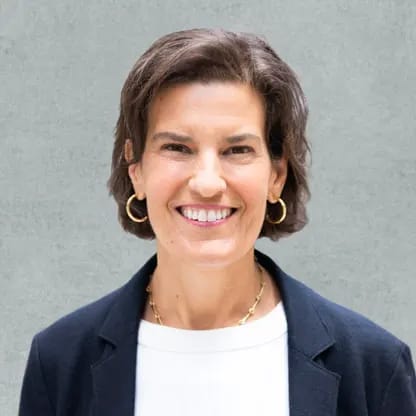
We recently sat down with Joanna Strober, a former venture capitalist and serial entrepreneur who is now the CEO of Midi Health. This year, Midi officially became the first "unicorn" in the menopause and midlife women’s health space. Joanna brings decades of experience to the table, along with a refreshing, unfiltered perspective on scaling direct-to-consumer healthcare, the reality of provider shortages, and the power of organic marketing.
Here are four key questions from our in-depth conversation on the Lifers podcast:
Chritsina Farr: You built a unicorn in a space where investors often shy away from direct-to-consumer (D2C) models. How did you navigate the pressure to build a traditional B2B enterprise company?
Joanna Strober: I kept joking with my team that it was 'B2B for show and B2C for dough'. It was clear to me that this had to really be a direct-to-consumer company because I was never going to be able to make the argument to employers that we could save them as much money as reducing cancer costs or GLP-1 spend.
But consumers—especially midlife women—spend a lot of money, and they believe their healthcare should be covered by insurance. We realized we could build a D2C company offering insurance-covered care. If you think about it, major health systems like Stanford are direct-to-consumer brands; people go there because they trust the brand. We are building a new healthcare system without walls for trusted women's healthcare, and that is historically sold to consumers.
Christina Farr: Midi’s organic growth has been phenomenal. How did you initially build that patient trust and word-of-mouth without relying solely on massive digital ad spends?
Joanna Strober: Initially, we started with menopause Tupperware parties. The question was, 'How do I get people to trust this online company?' So we went to different states, into people's houses, and our providers came just to answer questions about menopause, hormones, GLP-1s, and supplements. We found that in those cities where we had those parties, we would get more patients because the word-of-mouth really worked.
Honestly, I think that the storytelling of the company is really important, and I can't outsource that to someone else. We had a really rough Christmas... The estrogen patch shortage got significantly higher in December, and the percentage of our requests, because people were out of patches, went from 2% to 12% in 30 days. So I went on LinkedIn and I apologized, and I said, 'Look, this happened, and I'm really sorry.'. When people don't have a good visit, they come and they tell me. That's actually a gift. I might not feel it at the moment, but it is. It's a true gift, because then I can go and try to make things better.
Christina Farr: With the severe national shortage of specialized providers, how are you utilizing AI to actually scale this level of care nationally?
Joanna Strober: I almost can't sleep thinking about the different opportunities with AI. I genuinely believe we can use AI to scale expert care in a way that has never been available before.
We are building a system where we can ask questions and pull data from multiple sources to create a proposed care plan using AI before the patient even shows up to the visit. That way, the provider has all the time to talk to you, provide empathy, and have a discussion about your symptoms, and then the AI handles the follow-up. It is insanely exciting because it means we can offer significantly better care with fewer providers, which is critical since the provider shortage in this country is only getting worse.
Christina Farr: You speak to thousands of midlife women. What is the biggest misconception they have about navigating menopause?
Joanna Strober: One thing that really annoys me is when women say, 'I'm done with menopause'. It's really important to understand that you are never done with it; this is a hormonal path. We all remember having hormonal challenges at 13, and you continue to have them in your 20s, 30s, 40s, and 80s. We literally have 80-year-old patients coming to us because vaginal estrogen is great for UTI prevention, and nobody had ever offered it to them.
You are just managing hormonal challenges across your life. My goal is to help women feel good at any stage of their life, because getting older can actually be incredibly empowering. When my kids left the house and I realized I didn't have to cook dinner anymore and I could just eat ice cream if I wanted to, it was an incredibly empowering moment.