

The Midjourney takes the internet will hate
This story has all the ingredients to go viral on X, and it already has. A wealthy tech entrepreneur just announced an extremely shiny new object: a full-body ultrasound, available at a spa in San Francisco. Elon Musk reposted it, and boom, hundreds of physicians piled on to point out the myriad problems that would inevitably follow if this thing hit the mass market.
— (@)
The main issue? It's an argument we've heard before, through every wave of new technology. We heard it when wearables were in the headlines, as various forms of AI arrived in healthcare, with new tech-driven primary care practices, with whole-body MRI scans, and with diagnostic technologies like liquid biopsies. It's the fear that technologies claiming to detect disease early will instead produce thousands of "incidentalomas." Healthy, wealthy patients flood the system demanding tests and procedures they don't need, adding cost, increasing anxieties, and introducing new health risks.
Reserve Your Spot for Upcoming Webinars!
My reaction?
Perhaps I've become cynical, but my first thought was simply: let them try.
The system has so many institutionalized barriers that this is going to take an act of God to succeed. Even if the tech works exactly as advertised, it'll only reach a small patient population that can afford to pay cash. Insurance reimbursement would require clinical studies, years of market education, long sales cycles, and more. Good luck getting through all of that. Liquid biopsy companies, which screen for cancer, are still fighting sweeping coverage denials 15 years in, despite plenty of evidence showing efficacy as an alternative to tissue-based biopsy.
So the system will probably kill this company after a few years, especially if it can’t find a way to make a profit off of it. It's the fate of countless innovators.
On the incidentaloma question, I remain sympathetic. More data doesn't necessarily make us any healthier, and there's real literature here worth taking seriously. A review in Radiologic Clinics of North America lays out how incidentally detected findings carry substantial downstream costs, inclusive of cascades of follow-up tests, procedures, and patient worry, while noting that the true long-term, societal cost of all that has barely been quantified. The skeptics aren't wrong that we don't fully understand what we're unleashing.
That said, in the rush to a hot take, we gloss over some of the benefits this kind of wellness and prevention-focused technology can provide.
Look at wearables. I know plenty of people who've cut back on alcohol because they can see, in the data, exactly how it wrecks their sleep. People who can afford to pay out of pocket are making better long-term choices about their health. Our system may not care much about prevention, or want to pay for it, but there's a mountain of evidence that patients making better decisions today will reduce costs in the years to come.
`Upcoming Sessions
Live conversations with the people shaping healthcare.

Is It Finally the Moment for Alternative Plan Design?
Employers are under growing pressure to control healthcare costs while improving access, outcomes, and the member experience. That has renewed interest in

Type 2 Diabetes & Cardiometabolic Care: Wearables, AI & GLP-1s
The rise of wearables, GLP-1s, and AI is reshaping treatment for Type 2 diabetes, weight loss, and metabolic disease. We have

Verifying AI in Medicine: Is Healthcare AI Actually Ready for Deployment?
Is AI ready for real-world clinical care? Dr. Zak Kohane and Protege’s Engy Ziedan debate what it takes to safely trust AI in diagnosis and treatment, from benchmark performance and clinical evidence to whether we’re holding AI to a higher standard than humans.

Why Are Hospitals Hiring Chief AI Officers?
As AI moves from pilots into day-to-day healthcare operations, health systems are having to decide who should actually own the


Where are AI Agents Actually Working in Healthcare, and Why?
While the healthcare industry remains locked in a high-level debate over the theoretical potential of artificial intelligence, a select group of

Top Employers Share What Healthcare Startups Need to Know in 2026
As enterprise health purchasers face volatile medical cost trends and tightening operational margins, the standard vendor pitch of "improved clinical efficiency&

Peptide Therapy: Where Do We Go From Here?
Watch the full webinar Peptide therapies have moved from niche biohacking circles into mainstream medicine, reshaping conversations around weight management, metabolic health,

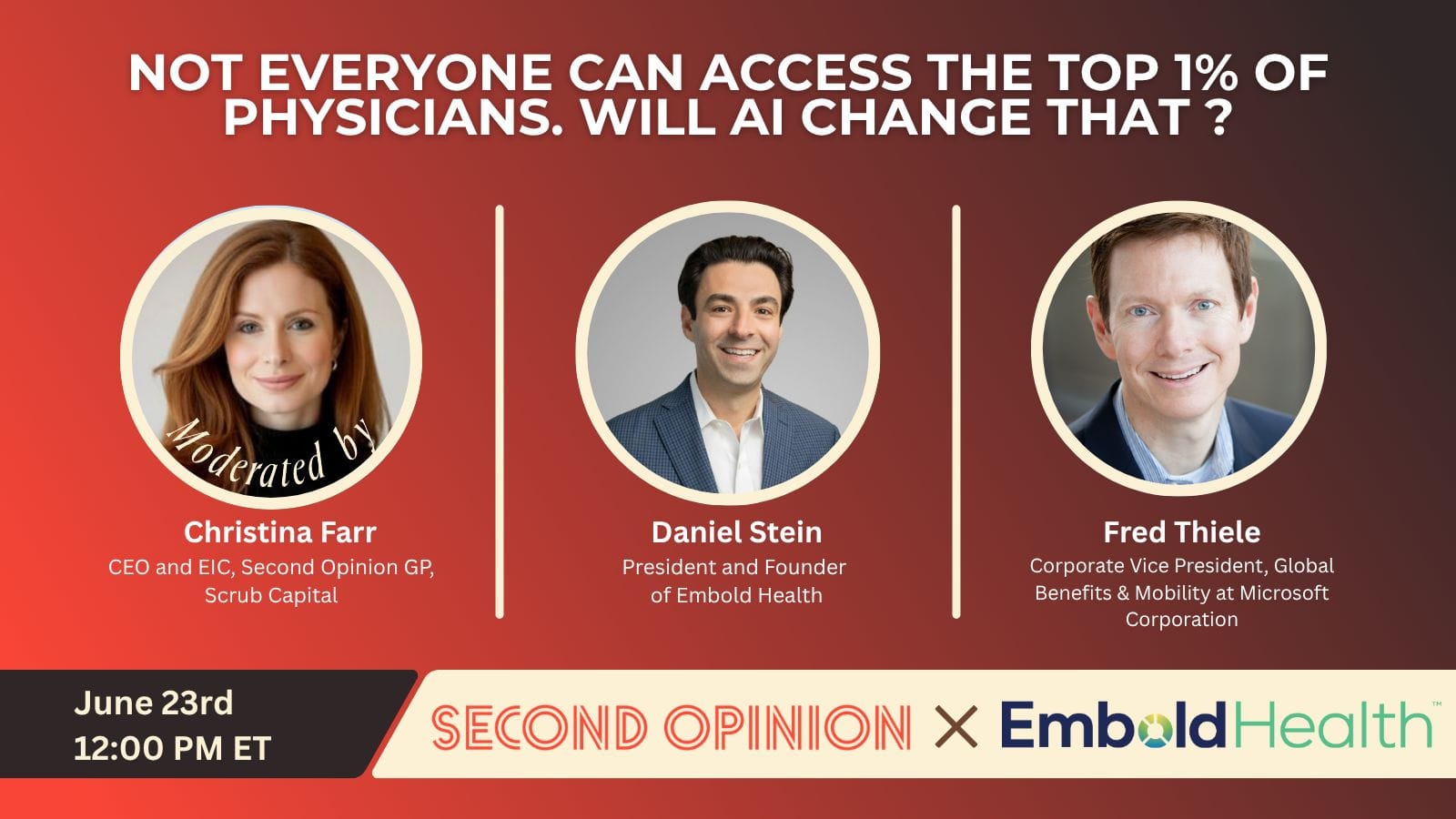
Not everyone can access the top 1% of physicians. Will AI change that?
Historically, top-tier medical expertise was limited by wealth and geography. As AI reshapes healthcare delivery, a vital question emerges: can it democratize intelligence to give everyone access to the caliber of care typically reserved for the top 1%?

Privacy AI and the Future of HIPAA
Watch the Full Webinar As AI reshapes healthcare and more patient data flows beyond traditional clinical settings, the rules governing privacy, access,