

Is the Secondary Market Replacing the IPO?
Michael Greeley is a healthcare-focused Co-Founder and General Partner at Flare Capital Partners.
The secondary market is going to have a boom year in 2026. And for early-stage investors, angels, and entrepreneurs, it’s going to provide some much needed relief in the form of liquidity before an exit (either an IPO or an acquisition). Limited partners, or LPs, those that back health-tech funds, will also look for ways to sell their underperforming funds.
All of this could have major ramifications for the health-tech industry.
But before we go there, some history.
Global alternative assets under management were estimated to be $19.5 trillion at the end of 2024, according to JPMorgan Asset Management. Approximately $4 trillion is in private equity, and half of that is in venture funds older than four years.
Given that, it is somewhat surprising that only in the past couple of years has there been an explosion in secondary market activity, referring for the opportunity for investors to buy and sell securities amongst themselves It looks that 2025 will be a high-water mark in secondary volume according to Lexington Partners, a leading secondaries investment firm, but the $200 billion of transactions will only be about 1% of global AUM.
Over the past dozen years, the level of activity within the secondary market has increased ~8x. That’s a massive jump. In the history of secondary market transactions, 80% of the activity has occurred just in the past decade. Up until about five years ago, the amount of secondary “dry powder” covered at least one to two years’ worth of transaction volume. What changed in 2025 was the rapid maturity of the secondary market and the acute structural need for greater private investor liquidity in the face of a dramatic drop in M&A and IPO volume over the past few years.
A reminder on upcoming webinars:

Secondary Transaction Volume and Amount of “Dry Powder” Available in Years
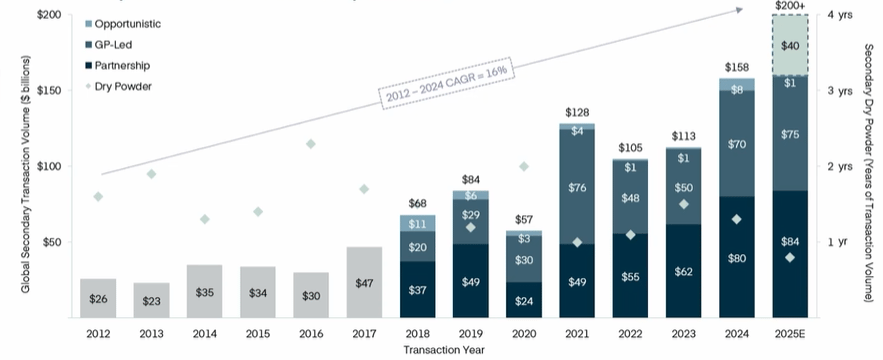
Source: Lexington Partners
So let’s talk about how secondaries work, because as a longtime healthcare VC, this is something that I do believe founders need to have a greater understanding of. It’s a hugely important mechanism not just for the founder to get liquidity, but also for the early investors and the company’s employees. Otherwise, there’s no other choice but to wait for M&A or an IPO. In healthcare, that can often take not one decade - but two.
Secondary transactions generally come in two flavors: (i) limited partners selling their interests in funds (“LP-Led”); and/or (ii) general partners creating “continuation vehicles (CV)” to sell specific portfolio companies to a new entity, affording original investors liquidity or the opportunity to roll-over into the CV (often referred to as “GP-Led” transactions). According to Jefferies, there was $103 billion of secondary market volume in 1H25, of which $56 billion was LP-Led and $47 billion was GP-Led. This level of activity was 51% greater than the $68 billion in 1H24.
Institutional investor interest in the secondary market is highlighted by the dramatic increase in AUM for the sector. According to Pitchbook, the total capital was $687 billion in 1Q25, a nearly 20x increase over the past two decades. It is estimated that approximately 10% of inflows to secondary funds are now from retail investors, further underscoring the broader acceptance.
Secondary funds are often the only approach to get investment exposure to massively successful private companies like SpaceX and OpenAI. Notably, Goldman Sachs, Morgan Stanley, and Charles Schwab all acquired secondary investment firms in 2025. For many potential investors, it’s a far less risky bet than investing in an early-stage company. There are now enough of those in healthcare that investors are interested in at the growth stages, and it’s not uncommon for employees at these businesses (or anyone with equity, including advisors and investors) to get outreach from one of the many secondary marketplace websites that have popped up. Companies like Maven Clinic, CapitalRx, Zellis, OpenEvidence, and others might well be of interest to secondary market investors ahead of an IPO.
Size of Secondary Market (AUM in $B, through 1Q25)
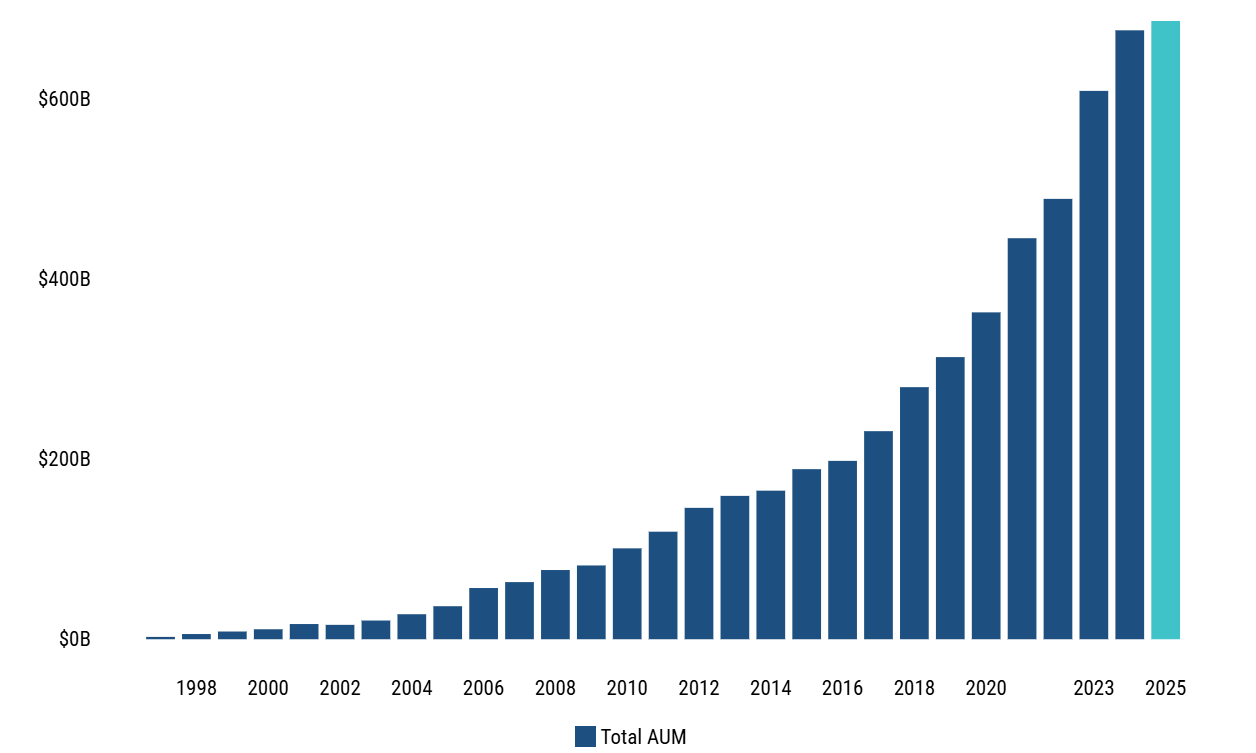
Source: Pitchbook
So there’s some good and bad in all this. For growth stage companies that have already gobbled up a lot of venture capital, there’s opportunities for employees to get more liquid and therefore stick around. Sword Health’s CEO, Virjilio Bento (“V”,) recently spoke publicly about his company’s combination of funds from primary and secondary sources. He’s signaled to the market that anyone who works at Sword Health might get a chance to sell their equity before an IPO (if the company moves ahead with one), which makes Sword an attractive place to work.
On the flipside, as a lot of capital is moving into secondary funds, that coincides with venture capital firms having a harder time raising new funds. Not such good news for very early-stage companies that still need to raise a lot of capital.
Through 3Q25, secondary funds have raised $105 billion, putting 2025 on pace to be the strongest fundraising year. There has been $122.6 billion raised over the trailing four quarters, which is an increase of 22% over the prior period, according to Pitchbook. Jefferies estimated that at the end of 2Q25, there was $302 billion of dedicated available secondary capital. As a point of comparison, the private credit industry increased 100-fold since 2006 to almost $700 billion.
Meanwhile, it has become increasingly challenging for new venture funds to raise capital, even as investors are able to come in at reasonable valuations. Studies have found that just a few funds command the lion’s share of all available capital allocated to healthcare.
Secondary Fundraising (through 3Q25)
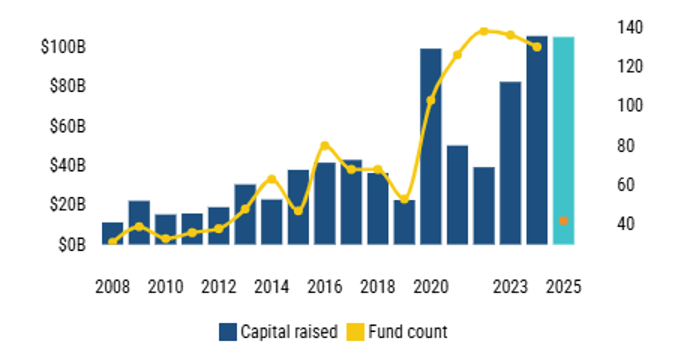
Source: Pitchbook
In summary:
- More liquidity is a good thing overall. It is estimated that there is $3.7 trillion of value tied up in nearly 830 “unicorn” companies. Coupled with the lack of significant M&A and IPO volume, investors are stuck with the conundrum of how best to turn unrealized gains into realized gains. This has been made even more urgent if one anticipates a dramatic correction for frothy AI-hyped portfolio companies. With more cash in the bank, experienced operators can start new companies.
- This is a great time for venture capital with valuations in a reasonable place. And yet, it’s more challenging than in the hype years of the pandemic to raise fresh capital, in part because LPs are investing in secondary funds. Both strategies - primary and secondary - make sense in the present market when valuations have come down to earth.
- The explosion in the availability of private credit affords private equity funds the possibility for dividend recaps, whereby free cash flow positive portfolio companies may be able to access debt for distributions, but that is not an alternative for most venture-backed portfolio companies. Expect to see more liquidity from private equity funds that employ these highly structured transactions. That will spark some interesting moves out of PE in the next few years, and we’re already seeing rumors!
Remember that the entire venture capital business model is predicated on being able to recycle capital into new investments. Absent M&A or IPO alternatives, expect to see fund managers employ creative solutions. For the entrepreneur, be mindful that your investors, at some point, will need to sell even though you have done everything right. Hopefully, it is not too early in the company-building journey to achieve a win-win.
About the Author
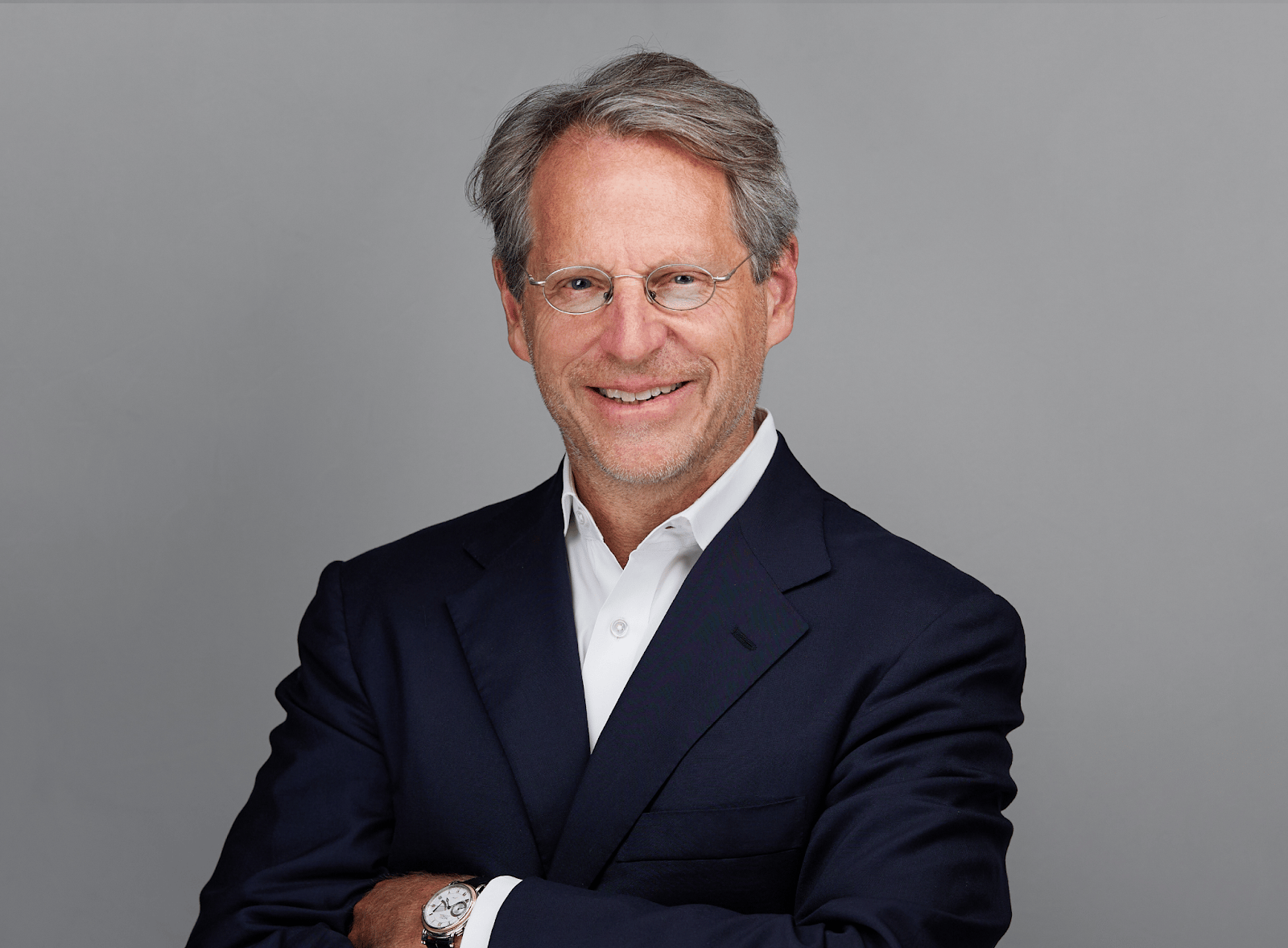
Michael Greeley is a Co-Founder and General Partner at Flare Capital Partners. Previously, Michael was the founding General Partner of Flybridge Capital Partners and earlier in his career was with Polaris Partners, as well as held positions at Wasserstein Perella & Co. and Morgan Stanley & Co.
Current and prior board seats include Aspen RxHealth, Author Health, Axuall, BlueTarp Financial, Cayaba Care, Circulation, Cohere Health, Explorys, Functional Neuromodulation, HealthVerity, higi, Inbound Health, Iora Health, MicroCHIPS, Nuvesse, Oshi Health, PolyRemedy, Predictive Biosciences, Predilytics, RightMove Health, T2 Biosystems, TARIS Biomedical, VidSys, and Welltok (observer). Additionally, Michael served on the board of International Data Group, the founding partner of IDG Capital.
He has served on various innovation and investment advisory boards for Advocate Health, Boston Children’s Hospital, Cleveland Clinic, MedStar Health, and MGB Ventures, as well as on the Governor’s Digital Health Council and the Massachusetts Technology Collaborative. He serves on the Investment Committee for the Partners Innovation Fund and on the Advisory Board of Harvard Business School’s Health Care Initiative. He was the past chairman of the New England Venture Capital Association and served on the board and executive committee of the National Venture Capital Association.
Michael earned a BA with honors in chemistry from Williams College and an MBA from Harvard Business School. He authors a blog focused on venture capital, innovation, and healthcare called On the Flying Bridge.
Want to support Second Opinion?
- 🌟 Leave a review for the Second Opinion Podcast
- 📧 Share this email with other friends in the healthcare space!
- 💵 Become a paid subscriber!
- 📢 Become a sponsor
Upcoming Sessions
Live conversations with the people shaping healthcare.

Is It Finally the Moment for Alternative Plan Design?
Employers are under growing pressure to control healthcare costs while improving access, outcomes, and the member experience. That has renewed interest in

Type 2 Diabetes & Cardiometabolic Care: Wearables, AI & GLP-1s
The rise of wearables, GLP-1s, and AI is reshaping treatment for Type 2 diabetes, weight loss, and metabolic disease. We have

Verifying AI in Medicine: Is Healthcare AI Actually Ready for Deployment?
Is AI ready for real-world clinical care? Dr. Zak Kohane and Protege’s Engy Ziedan debate what it takes to safely trust AI in diagnosis and treatment, from benchmark performance and clinical evidence to whether we’re holding AI to a higher standard than humans.

Why Are Hospitals Hiring Chief AI Officers?
As AI moves from pilots into day-to-day healthcare operations, health systems are having to decide who should actually own the


Where are AI Agents Actually Working in Healthcare, and Why?
While the healthcare industry remains locked in a high-level debate over the theoretical potential of artificial intelligence, a select group of

Top Employers Share What Healthcare Startups Need to Know in 2026
As enterprise health purchasers face volatile medical cost trends and tightening operational margins, the standard vendor pitch of "improved clinical efficiency&

Peptide Therapy: Where Do We Go From Here?
Watch the full webinar Peptide therapies have moved from niche biohacking circles into mainstream medicine, reshaping conversations around weight management, metabolic health,

Not everyone can access the top 1% of physicians. Will AI change that?
Historically, top-tier medical expertise was limited by wealth and geography. As AI reshapes healthcare delivery, a vital question emerges: can it democratize intelligence to give everyone access to the caliber of care typically reserved for the top 1%?

Privacy AI and the Future of HIPAA
Watch the Full Webinar As AI reshapes healthcare and more patient data flows beyond traditional clinical settings, the rules governing privacy, access,